


Relics of a Bygone era
.jpg)
Fossil Hutia bones
The Bahamas was a very different place thousands of years ago. During the Wisconsin Glaciation period, which occurred about 75,000 years ago, sea levels dropped 120m-140m lower than today. The Bahamas, which is today an archipelago of thousands of islands, cays, and rocks, consisted of three large islands and several smaller ones in the southern Bahamas during this glaciation period. The Great Bahama Bank and its islands formed a huge island, comparable in size to Hispaniola. The island was called “Paleoprovidence”.
Paleoprovidence was about 12km north of Cuba, and due to its close proximity, allowed for the dispersal of Cuban fauna to The Bahamas. Many species of Bahamian animals can trace their ancestry to Cuba, including Bahama Orioles, Brown Anoles, Northern Bahama Rock Iguanas, Bahama Parrots, and many others.
The Terrestrial fauna of The Bahamas was vastly different from today and included species no longer found in The Bahamas or on earth. Cuban Crocodiles, the largest predators in The Bahamas flourished in the country, in fresh and brackish water wetlands. Other large animals included the Bahamian giant tortoises as well as huge birds of prey such as the Bahamian Giant Barn Owl, Titan Hawk and Creighton’s Caracara. The Bahamas also had more species of reptiles besides tortoises and crocodiles including skinks, rat snakes, and water snakes. Rock Iguanas also had wider distributions than today including populations being found on New Providence.
Animal fossils from caves and blue holes in The Bahamas indicate that our islands had a much richer bird fauna than today and some species having much broader distributions in the archipelago than they do today. Bahama Parrots for example have historically been found on Acklins, Crooked Island, New Providence, and Eleuthera. The Great-lizard Cuckoo was once found on Long island and the Cuban Emerald was also found on New Providence along with the Cuban Green Woodpecker, and Cuban Crow. Hispaniolan Crossbills, Bluebirds, Scaley-naped Pigeons, and others were also discovered. Some of these species indicate that The Bahamas was cooler and drier than today.
Fossils of Bahamian wildlife have been found on many islands in The Bahamas including Grand Bahama, Abaco, New Providence, Andros, Eleuthera, Acklins/Crooked Island, San Salvador, Long Island, and the Exumas.

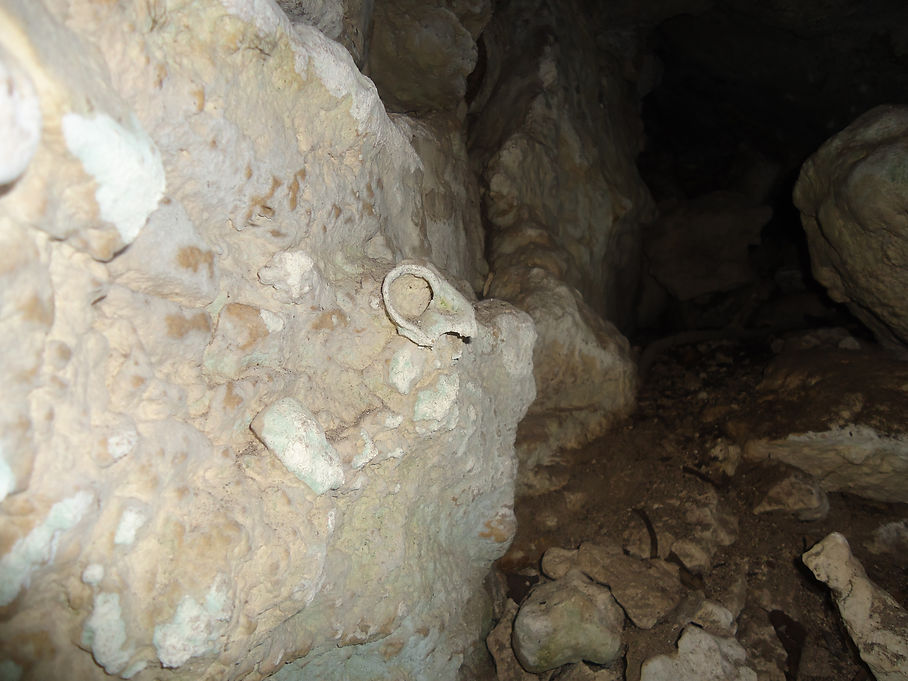
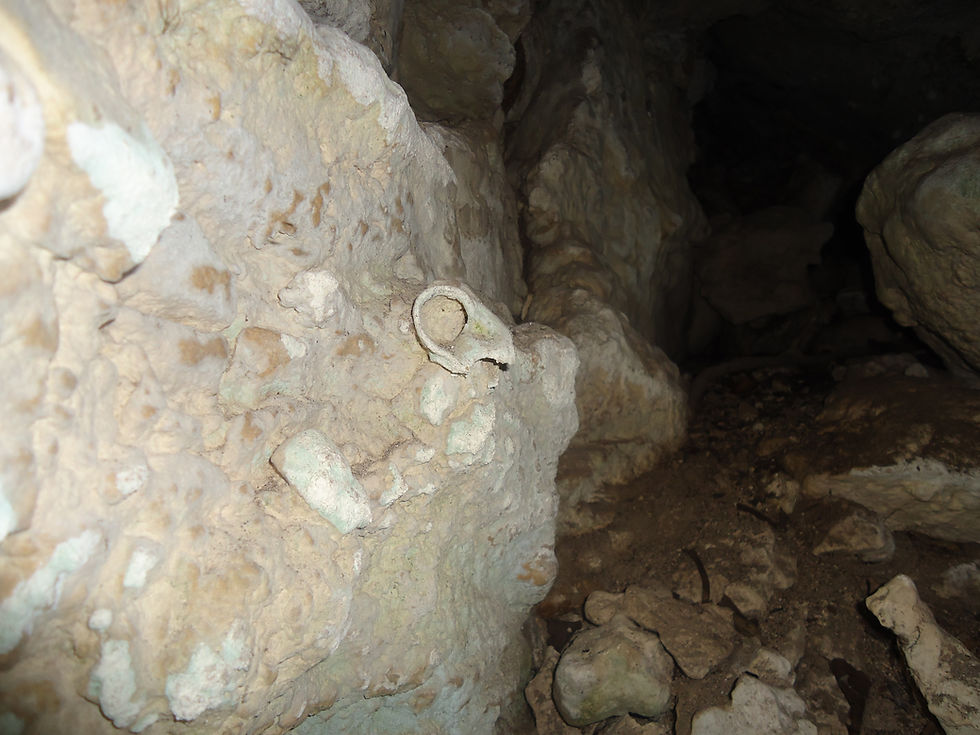
Fossil animal bones (species unknown)


fact sheets

COMING SOON!
COMING SOON!
COMING SOON!
COMING SOON!
posters
COMING SOON!
COMING SOON!
COMING SOON!
COMING SOON!
photo gallery
 |  |
|---|
resources
Browne, D.J., 1992. Phrynidae (Amblypygi) from Andros Island, Bahamas, with notes on distribution patterns, recent origin and allometry. Journal of Arachnology, pp.18-24.
Calonje, C., Knowles, L., Calonje, M. and Husby, C., 2014. Variability of vegetative flush colors in Zamia (cycadales). Journal of the Botanical Research Institute of Texas, 8(2), pp.531-540.
Mead, J.I. and Steadman, D.W., 2017. Late Pleistocene snakes (Squamata: Serpentes) from Abaco, The Bahamas. Geobios, 50(5-6), pp.431-440.
Morgan, G.S. and Albury, N.A., 2013. The Cuban crocodile (Crocodylus rhombifer) from late Quaternary fossil deposits in the Bahamas and Cayman Islands (pp. 161-236). University of Florida.
Oswald JA, Steadman DW. The late Quaternary bird community of New Providence, Bahamas. The Auk: Ornithological Advances. 2018 Apr 1;135(2):359-77.
Pregill, G.K., 1982. Fossil amphibians and reptiles from New Providence Island, Bahamas. Fossil vertebrates from the Bahamas.
Steadman, D.W., Franz, R., Morgan, G.S., Albury, N.A., Kakuk, B., Broad, K., Franz, S.E., Tinker, K., Pateman, M.P., Lott, T.A. and Jarzen, D.M., 2007. Exceptionally well preserved late Quaternary plant and vertebrate fossils from a blue hole on Abaco, The Bahamas. Proceedings of the National Academy of Sciences, 104(50), pp.19897-19902.
Steadman, D.W., Singleton, H.M., Delancy, K.M., Albury, N.A., Soto-Centeno, J.A., Gough, H., Duncan, N., Franklin, J. and Keegan, W.F., 2017. Late Holocene historical ecology: the timing of vertebrate extirpation on Crooked Island, Commonwealth of the Bahamas. The Journal of Island and Coastal Archaeology, 12(4), pp.572-584.
Steadman, D.W., Albury, N.A., Carlson, L.A., Franz, R., LeFebvre, M.J., Kakuk, B. and Keegan, W.F., 2020. The paleoecology and extinction of endemic tortoises in the Bahamian Archipelago. The Holocene, 30(3), pp.420-427.
Steadman, D.W. and Franklin, J., 2017. Origin, paleoecology, and extirpation of bluebirds and crossbills in the Bahamas across the last glacial–interglacial transition. Proceedings of the National Academy of Sciences, 114(37), pp.9924-9929.
White, B., Curran, H.A. and Wilson, M.A., 1998. Bahamian coral reefs yield evidence of a brief sea-level lowstand during the last interglacial. Carbonates and Evaporites, 13, pp.10-22.