


Edge of Tranquility

The interface of land and water is a crude definition of a shoreline or coastline. Coastal ecosystems cover 148.94 million km2 of land area, which is 29% of the earth's surface. Shorelines vary tremendously globally, with mountainous shorelines with a narrow shelf being the most common. About 16% of all shorelines are sandy. It has been estimated that coastal ecosystems contribute more than 77% of the world’s global ecosystem services.
Three commonly observed types of coastlines in The Bahamas is the rocky shores, sandy shores and wetlands.
The rocky and sandy coastlines of The Bahamas have been shaped by both biochemical and mechanical processes, including erosion. Key features include Pleistocene-era rocks formed through the lithification of eolianite dunes and coral structures. Much of the sand originates from the precipitation of calcium carbonate in marine waters, the breakdown of coral fragments, and the bioerosion of coral by organisms such as parrotfish.They are also important habitats for many species of animals including shorebirds, ghost crabs and other invertebrates. It is also an important nesting site for sea turtles.

Shorelines are also important for the tourism industry as millions of visitors come to The Bahamas to enjoy our pristine white (and pink) sandy beaches. International researchers also contribute hundreds of thousands of dollars to the Bahamian economy.
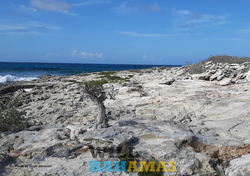
Rocky Shoreline
Beach strand coastal habitat
Bahamian coastlines have undergone significant changes over millennia due to storm activity, sea-level fluctuations, and, more recently, human influence. Coastal features such as lagoons, ponds, creeks, and bights often form in response to environmental changes that alter seawater flow around and within islands. Sediment deposition can seal lagoon mouths, creating enclosed hypersaline ponds. During glacial periods, falling sea levels exposed sandy shorelines, which over time, hardened and, through continued wave action and rainfall, developed into jagged karstic rock formations. In some areas, dead and exposed corals have become integrated into the rocky shoreline. Periodic sea-level changes have also contributed to the formation of beach rock.


fact sheets

COMING SOON!
COMING SOON!
COMING SOON!
COMING SOON!

posters
COMING SOON!
COMING SOON!
COMING SOON!
COMING SOON!

photo gallery
 |  |
|---|

