


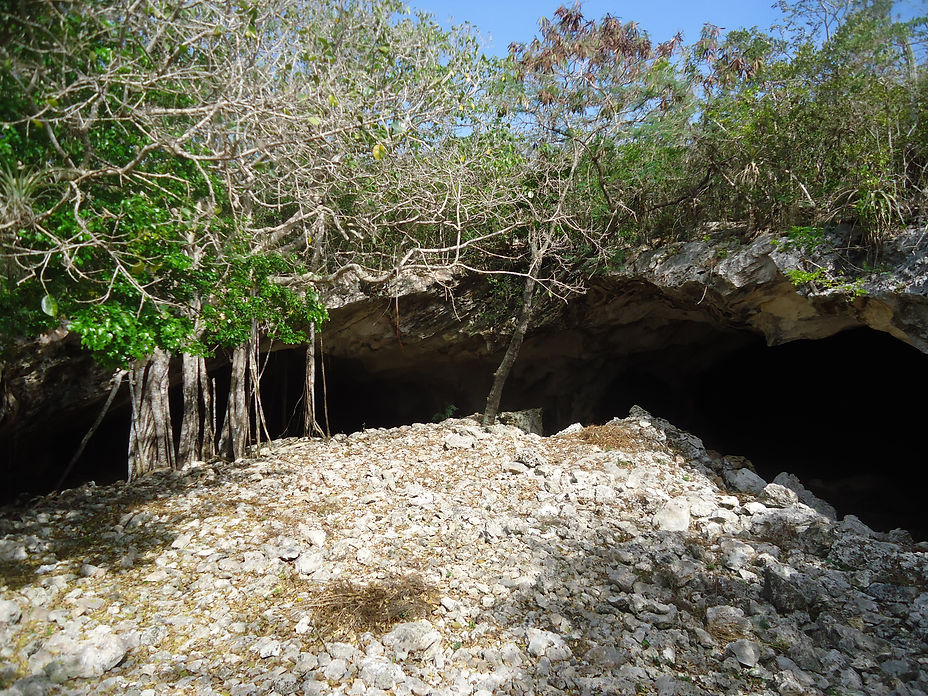
Nature's Secret Chambers
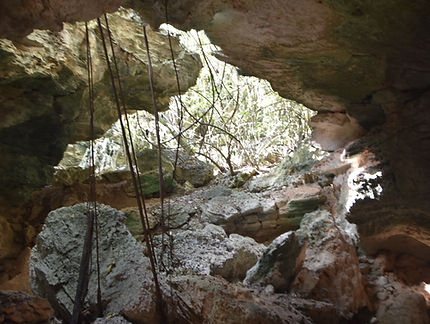
Our limestone islands hold a great deal of fascinating treasures. One of them are caves.
Caves are formed by the dissolution of limestone rock caused by the interaction of waters of different salt concentrations. There are several types of caves: Flank margin caves, Banana holes, and pit caves.
Flank margin caves are formed along the margin of a discharging freshwater lens and from the dissolution of limestone by a mixture of fresh and salt water under the flank of an enclosed landmass. The mixing dissolution does not just occur at one margin, such as where the underground saltwater mixes with the freshwater layer, but also where vadose (the area above the water table that is not saturated by water) freshwater mixes with phreatic (the part that is saturated with water) freshwater. Because both areas differ in water chemistry, they are the perfect medium for the dissolution of limestone. Most Flank Margin caves have dissolution ceilings 1-7m above sea level which indicates that they were formed in the late Pleistocene during the last interglacial period when sea levels were over 6m higher than today (126, 000 years ago).
Banana holes are voids formed from the dissolution of limestone rock by the mixing of rainwater from the vadose zone and phreatic zone. The roofs of these voids often collapse exposing a broad depression with vertical walls. When sea levels dropped during glacial periods, it exposed the caves. A good example of these banana holes can be found at Primeval Forest on New Providence.
Caves also contain features such as stalactites and stalagmites. As rainwater percolates through limestone rock, dissolved calcium carbonate (in the form of calcite) travels with it. When it reaches the roof of an underground cave (exposed due to a drop in sea level) the water drips out but the calcite is deposited at the site of the dripping water.
Eventually the calcite deposit accumulates on the roof of the cave and becomes a long vertical stalactite. The dripping of water from the roof of a cave and from stalactites can also form stalagmites, which are vertical columns of limestone on the floor of caves formed from the accumulation of calcite on the floor of a cave. Information gathered from a stalagmite recovered from a blue hole near Andros reveals that it was deposited between 160-139kya (thousand years ago), when sea levels were 42m lower than today.
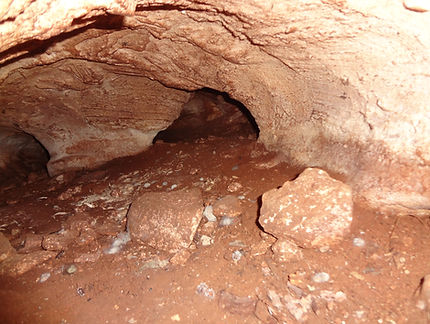
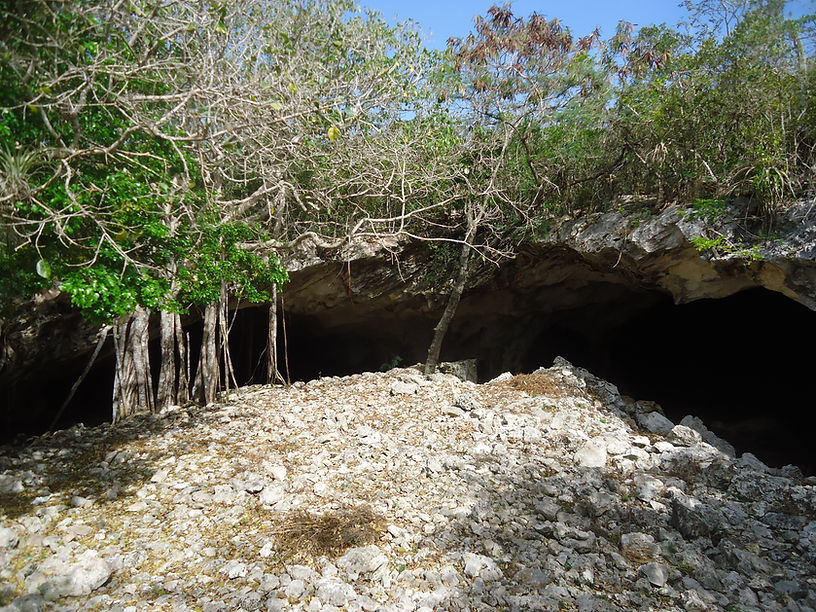
Inside of a cave
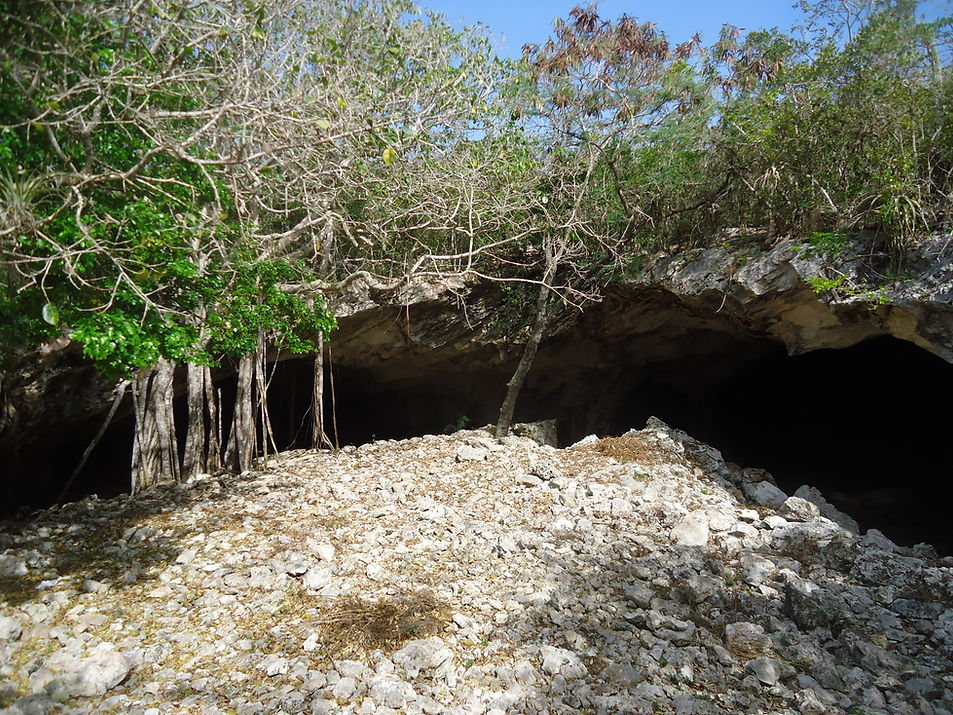
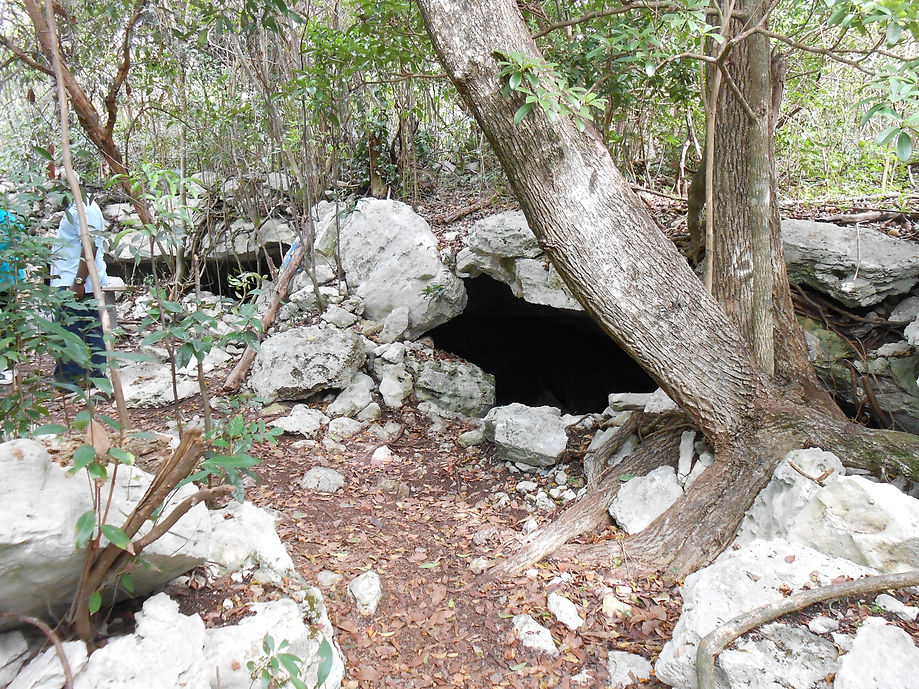
Cave in the Retreat Gardens

fact sheets

COMING SOON!
COMING SOON!
COMING SOON!
COMING SOON!
posters
COMING SOON!
COMING SOON!
COMING SOON!
COMING SOON!
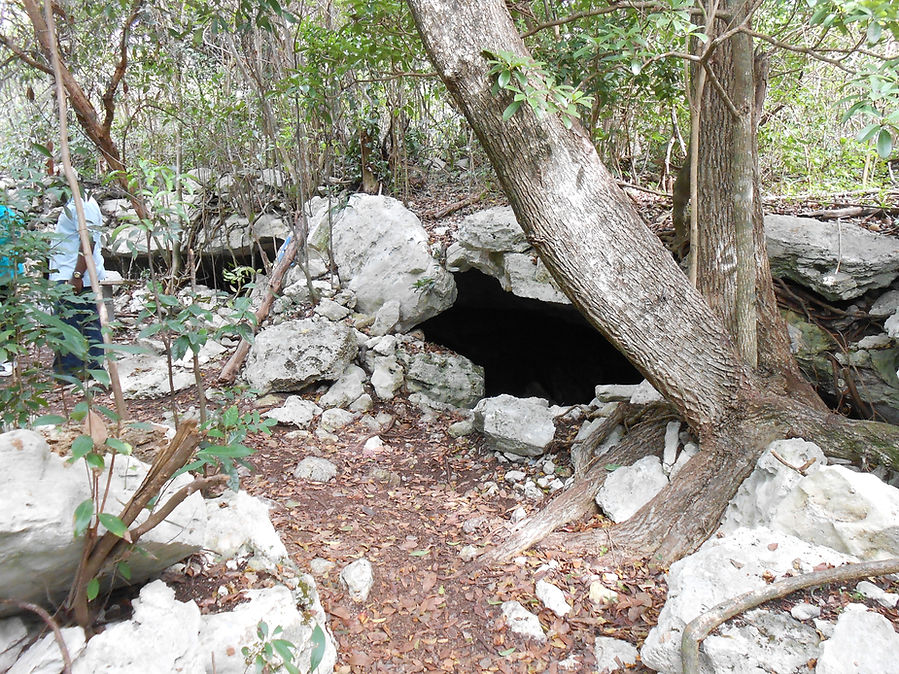
photo gallery
 |  |  |
|---|
resources
Gascoyne, M., Benjamin, G.J., Schwarcz, H.P. and Ford, D.C., 1979. Sea-level lowering during the illinoian glaciation: evidence from a Bahama" blue hole". Science, 205(4408), pp.806-808.
Mylroie, J. and Mylroie, J., 2017. Bahamian flank margin caves as hypogene caves. Hypogene Karst Regions and Caves of the World, pp.757-768.
Mylroie, J.E. and Carew, J.L., 1995. Karst development on carbonate islands.
Walker, L.N., Mylroie, J.E., Walker, A.D. and Mylroie, J.R., 2008. The caves of Abaco Island, Bahamas: keys to geologic timelines. Journal of Cave and Karst Studies, 70(2), pp.108-119.