


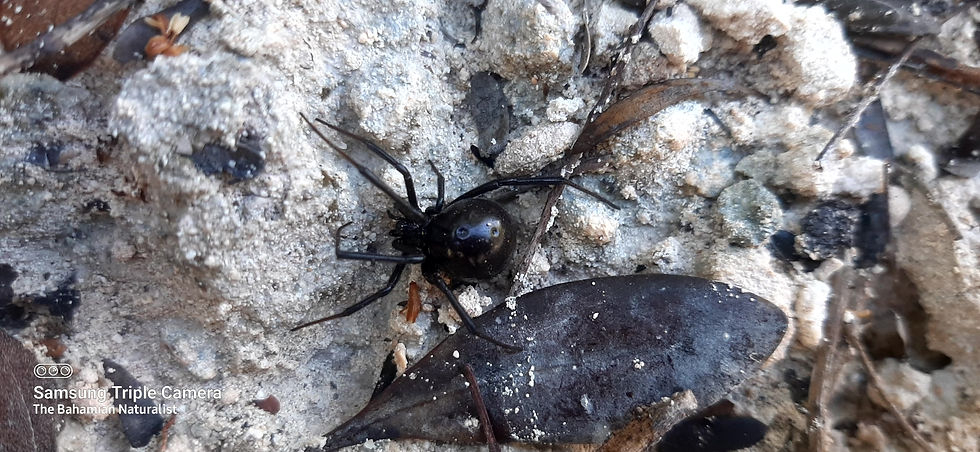

INVERTEBRATES
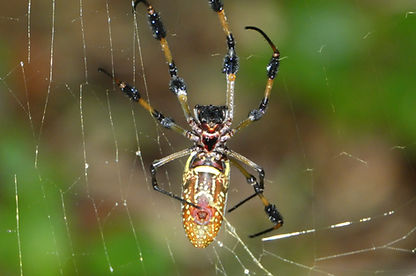
Banana Spider or Golden Orb- Weaver
Invertebrates are the largest (although paraphyletic) group of organisms on the planet. The term, “paraphyletic,” means that it is a group that shares a common ancestor and most of its descendants. Simply put, an invertebrate is any animal that lacks a backbone. Remarkably, approximately 90% of all living animal species fall within this diverse category, encompassing insects, crustaceans, arachnids, molluscs, annelids, sponges, and cnidarians, including jellyfish and anemones.
The ecological importance of invertebrates is profound, as they play integral roles in the intricate food webs and overall health of both macrohabitats and microhabitats within terrestrial ecosystems. Within the soil, the diversity of soil invertebrates is astounding, contributing to over 23% of all living organism diversity. This group includes protozoans, nematodes, arthropods, annelids, and mollusks.
While there exists some scientific disagreement, certain invertebrates hold potential, as biological indicators for monitoring habitats and environmental changes. Different habitats necessitate specific organisms as indicators; for instance, snails, ants, and millipedes can assess the health of the ground layer in terrestrial ecosystems, while earthworms are well-suited for monitoring the soil layer.
Native and endemic Bahamian invertebrates are part of many families. Some of these families include
7. Scarabaeidae
8. Apoidae
9. Orthalicidae
10. Vespidae
11. Papilionoidea
12. Araneidae
-
Ligiidae
-
Gecarcinidae
-
Bulimulidae
-
Scolopendridae
-
Acrididae
-
Cicadidae

Malachite Butterfly
Research on invertebrates in the Caribbean suggests that most of their ancestral roots trace back to South America. Cuba claims the distinction of being home to the most basal (lowest point of origin) Caribbean species. In The Bahamas, invertebrates from the Greater Antilles (specifically, Cuba and Hispaniola) and North America coexist, with dozens of endemic species, including the Bahamian Tarantula, Bahamian Cicada, Bahamian Walkingstick, Bahama Wood Roach, and Eleuthera Blue-faced Katydid.
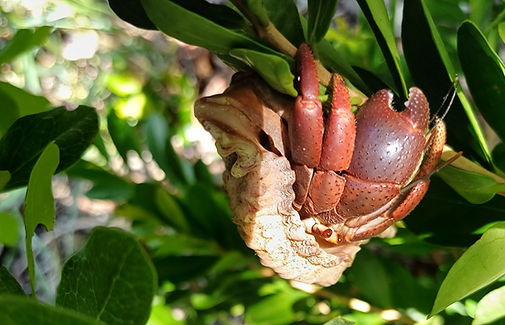
Soldier Crab/Land Hermit Crab
Invertebrates such as snails and slugs are part of the large Phylum Mollusca, and there are over 86,600 species recorded on Earth. This group is the second-largest animal phylum after arthropods.
Many people do not like snails and slugs, especially backyard farm growers who see them as pests. There are several remedies to mitigate against these animals. Caffeine has been shown to be very effective against slugs and beer (especially Heineken) can be useful. Ammonia can be used, but due to its highly toxic effects to plants and other native animals, it is not recommended.
Terrestrial mollusc species have suffered tremendously since the 1500s with 40% of all recorded species of animal extinctions falling within this group of animals since that time. What’s even more alarming is that 70% of all mollusc extinctions have occurred on oceanic islands.
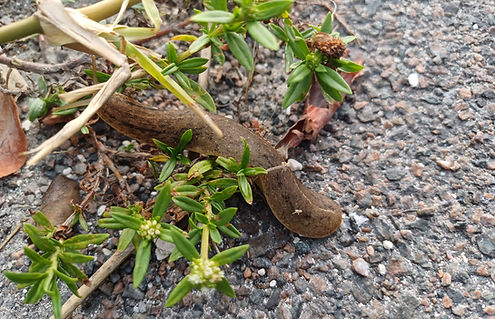
Leatherleaf Slug
Native and endemic Bahamian Terrestrial molluscs are part of many families. Some of these families include:
-
Cerionidae
-
Cepolidae
-
Bulimulidae
-
Achatinoidea
-
Helicoidea
-
Polygryidae
-
Annulariidae
8. Pomatiidae
9. Orthalicidae
10. Succineidae
11. Vertiginidae
12. Urocoptidae
13. Camaenidae
Click here to view a list of invertebrate species found in The Bahamas.
